
TL;DR: Panchakarma often brings mild, short-lived reactions like fatigue, headaches, loose stools, mood shifts, skin changes, and body aches as the body releases toxins. These usually ease within a few days. Watch out for symptoms that worsen instead of improve, ongoing vomiting or diarrhea, dehydration, high fever, severe abdominal pain, fainting, or allergic reactions. These need prompt attention from your practitioner. Panchakarma should always be done under trained, physician-led supervision so your protocol can be adjusted based on how your body actually responds.
Panchakarma is one of Ayurveda’s most powerful detox and healing systems. It has been used for thousands of years to clear out deep-seated toxins and restore balance in the body. But because it works on such a deep level, it’s common to feel different during and after treatment, sometimes in ways people don’t expect.
If you’re preparing for Panchakarma, or you’re already in the middle of a program and wondering if what you’re feeling is normal, this guide will walk you through what to expect and what should prompt a call to your practitioner.
Panchakarma isn’t a spa treatment. It’s a real therapeutic process that pulls stored toxins, called ama in Ayurveda, out of the tissues and moves them through the body’s natural elimination channels. The process usually includes a few stages:
Because toxins are being stirred up and pushed out, the body often needs a period of adjustment. Ayurveda calls this a healing crisis, and a good practitioner will actually expect it and plan around it.
These reactions are generally a sign that the treatment is doing its job. Most settle down within a few days as the body adjusts.
Feeling tired, even after resting, is one of the most common experiences during Panchakarma. The body is putting its energy into internal cleansing instead of daily activity.
As toxins move from the tissues into circulation before being eliminated, a mild headache can show up, especially in the first few days.
Looser stools, mild bloating, or a change in appetite are common, particularly after Virechana or Basti, while the digestive fire (agni) resets itself.
Ayurveda treats the body and mind as connected, so it’s not unusual to feel sudden sadness, irritability, or even a wave of clarity as tension is released. This is part of why lifestyle and daily rhythm play such a large role in Ayurvedic healing, since stress and emotion are stored in the body just as physical toxins are.
A few days of minor breakouts or dull skin can happen since the skin is one of the body’s exit routes for toxins.
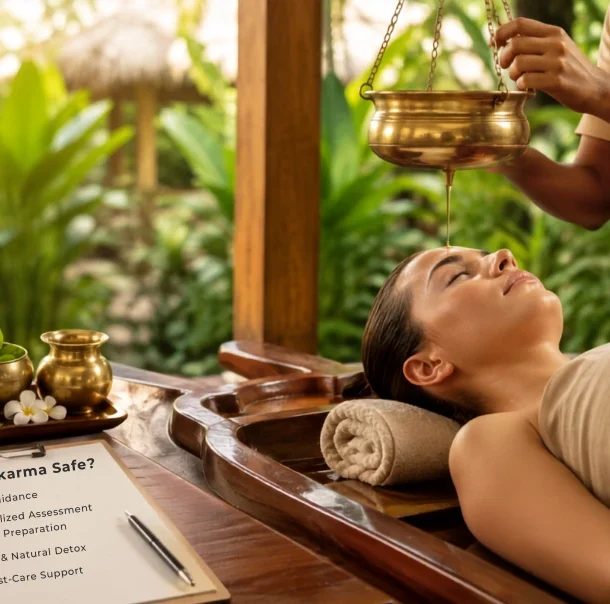
Especially after a strong Abhyanga (oil massage) or Swedana (steam session), mild soreness similar to how you’d feel after a workout is normal. Supportive therapies like Shirodhara are often added alongside the core treatments to help ease this transition and calm the nervous system.
Some people sleep more deeply than usual during Panchakarma. Others find their sleep briefly thrown off before it settles and improves.
Mild discomfort is expected, but Panchakarma should always be done under the care of a trained Ayurvedic practitioner. Certain symptoms go beyond a typical detox reaction and need attention right away.
A headache that keeps intensifying, or fatigue so severe you can’t function, should be reported to your practitioner immediately.
Some reaction is expected after Vamana or Virechana, but vomiting or diarrhea that continues past the treatment window can lead to dehydration.
Excessive thirst, dizziness, a dry mouth, dark urine, or feeling lightheaded when you stand up are all signs the body isn’t recovering fluids properly.
Feeling warm internally can happen during detox, but an actual fever is not part of a normal Panchakarma response.
Mild cramping can occur with Basti or Virechana, but pain that is sharp, intense, or doesn’t ease up needs medical attention.
Tiredness is normal. Feeling like you’re about to pass out is not, and usually means the treatment intensity needs to be adjusted.
Any rash, swelling, or trouble breathing after using certain oils or herbs is a medical issue, not just a detox symptom.
Mild detox effects should clear up within a few days once your Panchakarma program is finished. If something lingers or gets worse afterward, follow up with your practitioner.
|
Normal detox response |
Needs attention |
| Mild tiredness that improves with rest | Severe exhaustion, can’t function |
| Occasional loose stools | Uncontrolled diarrhea or vomiting |
| Mild headache | Intense or worsening headache |
| Temporary mood shifts | Panic or severe emotional distress |
| Slight body soreness | Sharp or severe pain |
| Mild thirst |
Dizziness or other signs of dehydration |
If you’re not sure which category a symptom falls into, check with your practitioner instead of waiting it out. A well-run Panchakarma program keeps a close eye on you, especially during the main treatment phase, and adjusts your protocol based on how you’re responding.
Panchakarma works because it moves something in your body, and that process can bring some temporary discomfort along with real healing. Mild fatigue, digestive changes, mood shifts, and light soreness are usually a normal part of detoxing.
That said, your body shouldn’t be pushed past what’s safe. Severe symptoms, signs of dehydration, a real fever, or anything that feels alarming means it’s time to pause and reach out to your practitioner.
The safest way to go through Panchakarma is with an experienced Ayurvedic practitioner who can personalize your program, check in on your progress, and help you tell the difference between a healing response and something that needs attention.
