If you’ve ever ended a long day feeling wired but exhausted, unable to switch off even when your body is begging for rest, you’re far from alone. Modern life keeps the nervous system in a near constant state of alert, and most of us are looking for something gentler than another supplement or another app notification reminding us to “breathe.” This is exactly where Ayurvedic therapies for stress step in, not as a quick fix, but as a system of healing that’s been refined over thousands of years to work with the body’s own rhythms rather than against them.
Ayurveda doesn’t treat stress as just a mental state. It views it as an imbalance that shows up in the body, the mind, and the nervous system all at once. That’s why Ayurvedic approaches to stress relief go beyond relaxation techniques: they aim to correct the root imbalance so calm becomes your baseline, not something you have to chase.
In this guide, we’ll walk through the most effective Ayurvedic therapies for stress and mind relaxation, how they work, and how you can realistically bring them into a modern routine with support from Yara Wellness.
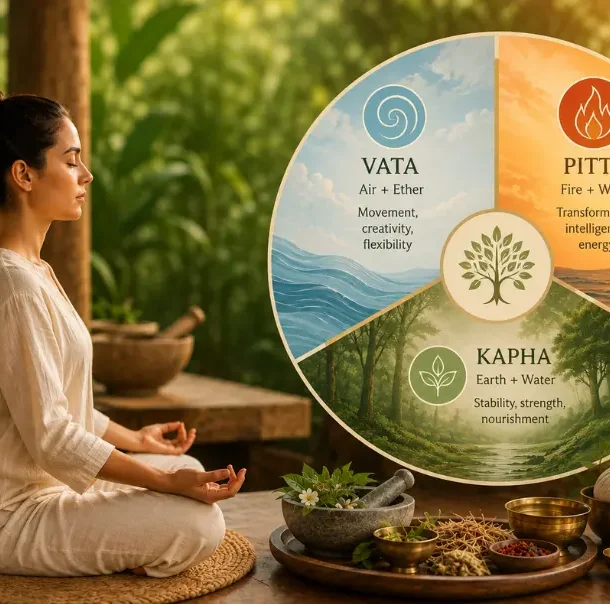
In Ayurveda, stress is largely linked to an aggravation of Vata dosha, the energy responsible for movement, communication, and the nervous system. When Vata is out of balance, you may notice:
This is different from how conventional medicine frames stress, which tends to focus on cortisol levels and the fight or flight response. Ayurveda doesn’t dismiss that biology; it simply adds a layer of understanding about why some people are more prone to stress than others, and what specifically will help calm their unique constitution. If you’re not sure where you stand, our dosha consultation is a good starting point before choosing a therapy.
Abhyanga, a full-body warm oil massage, is one of the most accessible and effective Ayurvedic therapies for stress relief. It’s often the first therapy recommended for anyone dealing with chronic tension.
Warm, medicated oils (commonly sesame, brahmi, or ashwagandha-infused oils) are massaged into the body using long, rhythmic strokes. This isn’t just relaxing; it stimulates the peripheral nervous system, improves circulation, and helps lower cortisol levels.
Many people notice a difference after just one session, but the real benefits build with consistency. Even a 10-minute self-massage (Swa-Abhyanga) with warm sesame oil before bed can make a noticeable difference over a few weeks. You can browse our range of Ayurvedic massage oils to get started at home, or book an in-studio Abhyanga session for a guided experience.
If there’s one therapy that’s become almost synonymous with Ayurvedic stress relief, it’s Shirodhara.
A steady, gentle stream of warm oil (or sometimes buttermilk or medicated decoctions) is poured over the forehead, specifically over the third eye area, for 30 to 45 minutes.
The forehead has a high concentration of nerve endings, and the continuous, rhythmic sensation of warm oil flow has a documented effect on brainwave patterns, often shifting the brain toward alpha wave states, the same state associated with deep meditation.
People frequently describe Shirodhara as inducing a state between waking and sleeping, where the mind stops its usual chatter almost involuntarily. It’s particularly effective for:
While Abhyanga and Shirodhara are excellent standalone therapies, Panchakarma for stress offers something more comprehensive: a full detoxification protocol designed to clear accumulated toxins (ama) that Ayurveda believes intensify stress and Vata imbalance.
Panchakarma is more intensive than a single spa-style treatment. It typically requires:
Nasya involves administering herbal oils or powders through the nostrils, and it’s one of the most underrated Ayurvedic mind relaxation techniques.
Ayurveda considers the nose a direct gateway to the brain (“Nasa Hi Shiraso Dwaram”). Oils like Anu Taila, often infused with calming herbs such as Brahmi or Jatamansi, are administered here specifically to soothe Vata in the head and nervous system.
Therapies work best when paired with the right herbal support. A few Ayurvedic herbs consistently show up in stress management protocols:
| Herb | Primary Benefit | How It’s Typically Used |
| Ashwagandha | Lowers cortisol, supports resilience to stress | Powder or capsule, usually at night |
| Brahmi | Enhances mental clarity, calms overactive mind | Tea, powder, or oil (used in Nasya) |
| Jatamansi | Deeply calming, supports sleep | Powder or added to Shirodhara oil |
| Shankhapushpi | Supports nervous system balance | Syrup or powder form |
Ashwagandha in particular has been the subject of several clinical studies. Research published in peer-reviewed journals has shown it can meaningfully reduce serum cortisol levels and self-reported stress scores compared to placebo, one of the few Ayurvedic herbs with substantial modern clinical backing. Explore our Ashwagandha and adaptogen collection to find a quality, sustainably sourced option.
No therapy works in isolation. Ayurveda emphasizes Dinacharya, a daily routine, as the foundation that makes these treatments effective long-term.
A few practices worth building into your day:
If you’re just starting to explore Ayurveda for stress relief, beginning with one or two of these daily habits alongside a weekly self massage practice is a realistic, sustainable entry point; no need to overhaul your entire routine overnight. Our guide to daily Ayurvedic routines walks through a simple version you can start this week.
Stress isn’t something Ayurveda expects you to eliminate entirely, life will always bring challenges. What Ayurvedic therapies for stress offer instead is a way to build genuine resilience, so your nervous system can absorb pressure without staying stuck in overdrive.
Whether it’s the grounding touch of Abhyanga, the meditative stillness of Shirodhara, or the deeper reset of Panchakarma, each therapy addresses stress at its root, not just its symptoms. Paired with consistent daily habits and the right herbal support, these practices offer a sustainable, natural path back to balance.
1. What is the best Ayurvedic therapy for stress relief?
Shirodhara is widely considered one of the most effective single therapies for acute stress and anxiety, thanks to its direct calming effect on the nervous system. For chronic or long-standing stress, a combination of Abhyanga and a personalized herbal protocol tends to offer more sustainable results.
Many people notice reduced tension and better sleep after just one or two sessions of Shirodhara or Abhyanga. For deeper, lasting change, especially with Panchakarma, practitioners typically recommend a course of treatments over several weeks.
Panchakarma is generally safe when done under the guidance of a qualified practitioner, but it isn’t recommended during pregnancy, acute illness, or certain medical conditions. A consultation beforehand helps determine the right approach for your health status.
Yes. Many people use Ayurvedic therapies alongside conventional approaches like therapy or medication. It’s a good idea to keep your doctor informed, particularly if you’re taking herbal supplements like Ashwagandha alongside prescribed medication.
Abhyanga is a full body oil massage aimed at overall relaxation and circulation, while Shirodhara focuses specifically on the head with a continuous stream of oil to calm mental activity. Many treatment plans use both together for a more complete effect.
Self-massage (Swa-Abhyanga) with warm sesame or Ashwagandha oil is easy to do at home and is a great starting point. Shirodhara and Panchakarma, however, require professional equipment and supervision for safe, effective results.