
You wake up tired. Your digestion feels sluggish. Your skin isn’t glowing the way it once did. No matter how many green smoothies you drink or yoga sessions you attend, something still feels… off.
Modern life is extraordinary, but it comes at a cost. Chronic stress, processed foods, environmental pollutants, disrupted sleep cycles, and a relentless pace of living leave a residue deep within the body. Over time, this residue, which Ayurveda calls Ama, or accumulated toxins, settles into tissues, disrupts the flow of vital energy, and becomes the root of disease.
For over 5,000 years, Ayurvedic medicine has offered a powerful, systematic answer to this modern dilemma: Panchakarma.
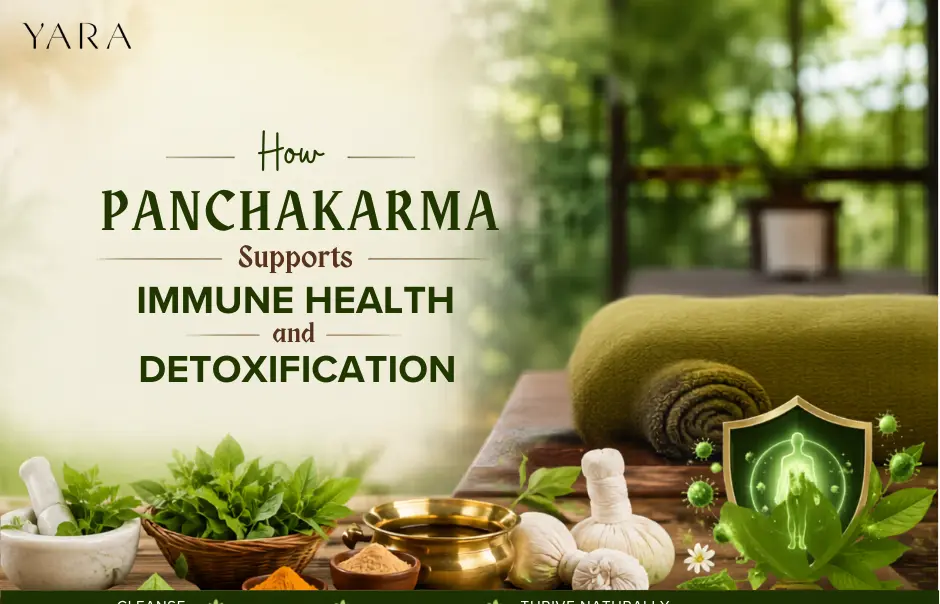
Derived from the Sanskrit words Pancha (five) and Karma (actions or therapies), Panchakarma is a comprehensive system of five therapeutic procedures designed to cleanse the body from the inside out not superficially, but at the deepest cellular level. It is not a spa day. It is not a juice cleanse. It is one of the most profound healing traditions in human history.
In this guide, we’ll walk you through everything you need to know about Panchakarma: the philosophy behind it, each of the five therapies explained in detail, who it’s right for, and what your journey looks like at Yara Wellness.
To understand Panchakarma, you need to briefly understand Ayurveda’s core framework.
Ayurveda – the “Science of Life” – teaches that health is a state of dynamic balance. The human body is governed by three biological energies, or doshas: Vata (air and space), Pitta (fire ), and Kapha (earth and water). Every person is born with a unique combination of these doshas, known as their Prakriti or constitution.
When the doshas are in balance and digestion (Agni) is strong, the body functions beautifully – nutrients are absorbed, waste is eliminated, energy flows freely, and the mind is clear. But when we eat poorly, live under chronic stress, suppress emotions, or ignore the rhythms of nature, the doshas become imbalanced. Digestion weakens. Metabolic waste – Ama – begins to accumulate in the channels of the body.
Ama is an undigested toxin. It coats the intestinal walls, clogs the channels (called Srotas), dulls the senses, and over time, becomes the seedbed of illness. Ayurveda identifies Ama accumulation as the primary cause of virtually all chronic diseases.
Panchakarma is the method for removing Ama from the body, restoring the balance of the doshas, and rekindling the digestive fire. It is one of the most important branches of Ayurvedic medicine, described extensively in the two foundational Ayurvedic texts: the Charaka Samhita and the Sushruta Samhita.
Read More: What is Panchakarma Therapy?
A genuine Panchakarma treatment is never just the five treatments themselves. It is a carefully structured three-phase process.
Before the main therapies can begin, the body must be prepared. Think of it like soaking a stubborn stain before washing – the preparation makes the deep cleansing possible.
Purvakarma consists of two essential practices:
Snehana (Oleation Therapy): The body is lubricated internally and externally with medicinal fats – typically clarified butter (ghee) infused with herbs. Internally, the patient drinks prescribed amounts of medicated ghee over several days, which softens and loosens Ama stored deep in the tissues and brings it back into the digestive tract for elimination. Externally, a full-body Ayurvedic massage known as Abhyanga is performed using warm herbal oils, further loosening toxins from the periphery and directing them toward the gut.
Swedana (Herbal Steam Therapy): Following oleation, the body is subjected to therapeutic sweating using herbal steam. This dilates the channels (Srotas), liquefies the loosened toxins, and helps transport them toward the digestive tract, from where they can be expelled during the main Panchakarma procedures.
Purvakarma typically lasts 3 to 7 days, depending on the individual’s constitution, the severity of imbalance, and the specific therapies planned. Rushing this phase compromises the entire program.
This is the heart of Panchakarma – the five primary therapeutic procedures, each targeting different channels of the body and different doshas. We will explore each in full detail in the next section.
Post-treatment care is as critical as the treatment itself. After deep cleansing, the body is in a sensitive, receptive state – like freshly tilled soil. What you sow now matters enormously.
Paschatkarma involves a carefully graduated dietary protocol called Samsarjana Krama, which progressively moves from light liquids (warm water, rice water) to soft, easily digestible foods, and finally back to a normal diet over 7 to 14 days. Lifestyle guidelines – adequate rest, avoidance of cold and wind, gentle movement, and emotional calm – support the body as it integrates the healing.
Many people find that the most profound transformations – in energy, digestion, skin, and mental clarity – emerge during this recovery phase.
Primary Target Dosha: Kapha
Of all the doshas, Kapha – the earth-and-water energy – is the most prone to stagnation and accumulation in the upper body, particularly in the lungs, stomach, and chest. When Kapha becomes excessively aggravated, it manifests as mucus congestion, sluggish digestion, heaviness, obesity, and respiratory disorders.
Vamana is the designated therapy for purging excess Kapha through the upper GI tract. Through controlled, medically supervised emesis (vomiting), accumulated Kapha-related toxins are expelled from the stomach and respiratory tract, restoring lightness, clarity, and proper respiratory function.
Conditions Addressed:
How It Is Performed:
Vamana is never performed without thorough preparation. After several days of Snehana and Swedana, the patient receives a carefully formulated emetic preparation – typically using herbs like Madanaphala (Randia dumetorum) or Yashtimadhu (licorice) in combination with warm milk or herbal decoctions. This stimulates the expulsion of stomach contents and loosened Kapha from the respiratory channels. The process is conducted in a controlled clinical setting under close supervision.
What to Expect:
The session typically lasts 45 minutes to an hour. Patients often report feeling remarkably lighter, clearer-headed, and freer in the chest afterward. The throat may feel mildly raw, and a period of rest, warm fluids, and light diet follows.
Contraindications: Pregnancy, menstruation, extreme weakness, cardiac conditions, dehydration, children under 12, the elderly.
Primary Target Dosha: Pitta
Where Kapha stagnates and accumulates, Pitta – the fire energy, overheats and inflames. Excess Pitta manifests as anger, skin inflammations, acid reflux, liver disorders, loose stools, and inflammatory conditions throughout the body.
Virechana is the purification of the small intestine, the primary seat of Pitta, through medicated purgation. By systematically flushing the GI tract with carefully chosen herbal laxatives, accumulated Pitta toxins are eliminated, and the fire of digestion is reset to a balanced, healthy level.
Virechana is considered particularly powerful because the small intestine is not only the center of Pitta but also the primary site of nutrient absorption. Cleansing this zone improves digestion, metabolism, and nutrient assimilation at a foundational level.
Conditions Addressed:
How It Is Performed:
After preparatory oleation and steam therapy, the physician prescribes a specific herbal purgative, commonly an herbal preparation, based on the patient’s constitution and the severity of the imbalance. The herbs are taken in the morning on an empty stomach. Purgation typically begins within a few hours and may continue for several hours, with the number of motions carefully monitored to determine the success of the therapy.
What to Expect:
Patients typically experience mild cramping during active purgation, followed by profound lightness, reduced heat and inflammation in the body, clearer skin, and improved mood. Pitta-driven anger and irritability often noticeably decrease. Rest, warm water, and the graduated dietary protocol follow.
Contraindications: Vata-predominant constitutions (without proper preparation), diarrhea, dehydration, rectal prolapse, pregnancy, extreme weakness.
Primary Target Dosha: Vata
If Vamana is the therapy for Kapha and Virechana is the therapy for Pitta, then Basti is the supreme therapy for Vata, and Vata is considered the king of all doshas. In Ayurveda, Vata governs all movement in the body: nerve impulses, circulation, elimination, hormonal signaling, and the movement of thought itself. When Vata is disturbed, everything is disturbed.
This is why Basti is called the “Ardha Chikitsa of Panchakarma.” The colon is the primary seat of Vata, and by introducing medicinal substances directly into the colon, Basti addresses imbalances that no other therapy can reach. Classical Ayurvedic texts state that Basti alone can accomplish half the total work of Panchakarma.
There are two primary forms of Basti:
Anuvasana Basti (Oil Enema): Warm medicated oils are introduced into the rectum. This nourishes and lubricates the colon, strengthens the nervous system, and is deeply rejuvenating. It is particularly suited for Vata conditions involving dryness, depletion, and weakness.
Niruha Basti (Decoction Enema): A more complex preparation combining herbal decoctions, honey, salt, herbal oils, and sometimes herbal pastes is introduced into the colon. This form has a stronger cleansing and detoxifying action. The two forms are often alternated in a prescribed sequence called Karma Basti (a series of 30), Kala Basti (a series of 16), or Yoga Basti (a series of 8) based on the treatment plan.
Conditions Addressed:
What to Expect:
Basti is generally well-tolerated and, for many patients, deeply relaxing. The medicated preparation is introduced gently while the patient lies on their left side. The preparation is retained for a specified duration before evacuation. Patients often notice improved sleep, reduced joint pain, better digestion, and a sense of groundedness within days.
Contraindications: Bleeding disorders, severe diarrhea, rectal fistula or inflammation, hernias, and certain abdominal conditions.
Primary Target Dosha: Kapha (in the head region); also addresses Vata and Pitta in the head
In Ayurveda, the nose is called “the gateway to the head,” the direct route to the brain, the senses, and the entire nervous system above the shoulders. The nasal passages connect to the sinuses, the eyes, the ears, and the central nervous system, making nasal administration of medicines a uniquely powerful route of delivery.
Nasya therapy involves the instillation of medicated oils, herbal juices, herbal powders, or medicated milk through the nostrils. By doing so, the medicine travels through the nasal passages and is absorbed directly into the head region, cleansing accumulated Kapha, balancing the nervous system, and nourishing the brain and sense organs.
Types of Nasya:
Conditions Addressed:
How It Is Performed:
The patient lies on a treatment table with the head slightly tilted back. A gentle face massage with warm herbal oil is performed first to open the channels. Warm medicated oil or herbal preparation is then instilled, drop by drop, into each nostril. The patient breathes naturally as the medicine works its way through the nasal passages. The session is followed by gentle gargling with warm water and rest.
What to Expect:
Many patients experience immediate clarity as though a fog has lifted from their head. Sinuses open, headaches ease, and there is often a profound sense of mental spaciousness. Some initial discharge (mucus) is normal as accumulated Kapha is expelled.
Contraindications: Immediately after eating, during pregnancy, active nasal bleeding, acute fever, in children under 7.
Primary Target Dosha: Pitta (in the blood)
The fifth and most specialized of the Panchakarma therapies, Raktamokshana, addresses toxins that have entered the bloodstream itself. What Ayurveda calls Rakta Dushti, or impurity of the blood.
In Ayurvedic physiology, the blood (Rakta Dhatu) is closely linked to Pitta dosha. When Pitta becomes excessively aggravated and enters the blood, it causes a range of inflammatory, skin, and metabolic conditions that cannot be resolved through digestion-based therapies alone. Raktamokshana directly purifies the blood by removing Pitta-vitiated blood.
Classically, Raktamokshana was performed using leeches (Jalaukavacharana), which remains one of the most scientifically validated methods in traditional medicine, as leech saliva contains powerful anticoagulant, anti-inflammatory, and blood-thinning compounds. Other classical methods included the use of sharp instruments, horns, or a gourd, though these are rarely used in modern practice.
In contemporary Ayurvedic wellness settings, blood purification is also achieved through herbal Raktamokshana, intensive internal herbal therapies using blood-purifying herbs such as Manjistha (Rubia cordifolia), Neem, Sariva (Indian Sarsaparilla), and Guduchi (Tinospora cordifolia) without physical bloodletting.
Conditions Addressed:
What to Expect:
For leech therapy, the leeches are applied to the affected area and allowed to feed for 20–45 minutes. Their saliva numbs the area, so discomfort is minimal. Patients frequently report dramatic improvements in localized skin conditions and inflammatory symptoms following the procedure. Herbal blood purification is gentler and involves daily herbal formulations taken over an extended period.
Contraindications: Anemia, pregnancy, bleeding disorders, anticoagulant medications, extreme weakness, children, and the elderly.
Panchakarma is appropriate for a remarkably wide range of people. While it originated as a therapeutic protocol for disease, Ayurveda has always emphasized prevention as the highest form of medicine, and Panchakarma is one of the most powerful preventive tools available.
You may be an ideal candidate if you are experiencing:
Panchakarma is also valuable as a seasonal wellness ritual, practiced ideally at the junctions of seasons (particularly in autumn and spring) to cleanse accumulated doshas before they progress to disease.
And for those on a path of conscious living, spiritual practice, or inner growth, Panchakarma offers something beyond physical detox. The clearing of Ama from the body creates remarkable mental clarity, emotional openness, and a heightened sensitivity to life that practitioners across millennia have described as one of its most treasured gifts.
Panchakarma is a powerful medical intervention, not a casual wellness trend. Certain individuals should approach it with care or avoid specific therapies:
This is precisely why consultation with a qualified Ayurvedic physician before beginning any Panchakarma program is not optional it is essential. The power of these therapies lies in their precise customization to the individual.
There is a moment that many Panchakarma patients describe, usually in the final days of treatment or in the quiet mornings of recovery, when something fundamental shifts. The heaviness lifts. The mind becomes still. The body, finally unburdened of what it has been carrying, remembers what it feels like to simply be well.
Panchakarma is not a quick fix. It is an invitation to slow down, to listen, to restore. It is the most time-honored method human wisdom has developed for returning the body, mind, and spirit to their natural state of wholeness.
At Yara Wellness, we are honoured to guide you through this ancient and profoundly relevant journey. Whether you are managing a chronic condition, seeking preventive care, or simply ready to reclaim your vitality, Panchakarma may be the most meaningful investment you make in your health
Programs vary from 7 to 21 days, with the full classical protocol lasting 21 days. The duration depends on your constitution, health goals, and the specific therapies involved. Your Ayurvedic physician will recommend the appropriate length.
Most therapies are gentle and deeply relaxing. Vamana and Virechana involve active elimination, which some find intense but rarely painful. Basti is generally comfortable, and Nasya is mild. All procedures are conducted with your comfort as the priority.
It is strongly recommended to reduce work commitments, especially during active treatment days. Panchakarma demands rest; your healing happens not just on the table but in the quiet hours between sessions. Treating your program as a retreat gives you the best results.
Classical Ayurveda recommends a seasonal Panchakarma ideally twice a year, at the change of seasons. For those with significant health concerns, more frequent programs may be recommended initially.
An Ayurvedic massage (Abhyanga) is a wonderful practice, but it is a preparatory therapy, Purvakarma, not Panchakarma itself. True Panchakarma involves the five core elimination therapies described in this guide and must be administered under the supervision of a qualified Ayurvedic physician.
A growing body of modern research supports Panchakarma’s effects. Studies have documented significant reductions in lipid peroxidation markers, heavy metal concentrations, and inflammatory cytokines following Panchakarma treatment. The anti-inflammatory compounds in leech saliva are well-characterized. And the clinical outcomes documented across thousands of years of practice represent a profound empirical evidence base that modern science is increasingly validating.